
Please note: this essay was originally written in 2016 and the content contains reference to violence, sexual violence, and armed conflict.
Introduction
It is not uncommon to come across texts that show women as inherently peaceful people who can offer invaluable contributions in peace-making and peacebuilding processes, whilst offering no reasoning or valid proof as to how they are so peaceful. Recently, Nozipho January-Bardill, a South African special adviser to UN Women claimed that “women prefer for people not to be killed. If there’s a choice, women opt for life,” and the United Nations claims the presence of women can “help to reduce conflict and confrontation.” These assumptions are written into policy, often without challenge. Although there is a distinctive focus on the power of women in peacebuilding processes, these claims ignore women’s contributions to conflict and violence.
In this essay, I aim to explore the idea that women are inherently peaceful. Their contributions will be analysed and Security Council Resolutions will be discussed, as will be several texts that look at women and their participation in violent conflict and peacebuilding.
To believe that women are inherently peaceful, is to make an assumption on women being unable to partake in violence. When women have been violent, it is often assumed that they are either ‘bad apples’ and do not reflect real womanly attributes or that they are influenced by men. In this essay, I will argue that women can be violent out of their own enjoyment and even when not acting in violent ways, women can be facilitating violence. I will look at the success the so-called ‘Islamic State’ in Syria and the women in the Abu Ghraib photographs scandal, where male and female soldiers abused detainees in Iraq and took photos which were later leaked to the public. Finally, I will look at the success of the all-female United Nations peacekeeping unit in Liberia (UNMIL).
Where we are now: Security Council Resolutions and Women in the Military
The United Nations Security Council Resolution 1325 (UNSCR 1325) was adopted unanimously on the 31st October 2000. This resolution reaffirms the important role of women in the prevention and resolution of violent conflict, peace negotiations, peace-building, peacekeeping, humanitarian response and the importance of their equal participation. The resolution urges all actors to increase the participation of women and mainstream gender perspectives within United Nations peace and security efforts. It stresses the importance of measures to protect women and girls from gender-based violence, particularly rape and other forms of sexual abuse in conflict. It also assumes that women are the only ones who can suffer from sexual violence, and therefore, all women are against sexual violence.
Since the adoption of UNSCR 1325, there have been six additional United Nations Security Council Resolutions that have been adopted to ensure not only women’s participation in peacekeeping and peacemaking operations, but also the consideration of women’s issues in peace talks. The first follow up to UNSCR 1325 was the UNSCR 1889, which called for further strengthening of women’s participation in peace processes and the development of indicators to measure progress on UNSCR 1325.
There was a push to recognise the impact of sexual violence in conflict has on the maintenance of peace and security, which led to the adoption of UNSCR 1820. UNSCR 1820 linked sexual violence in conflict with women, peace and security issues and highlighted that sexual violence in war constitutes a crime. This means that State parties need to immediately take appropriate measures to protect civilians from sexual violence. UNSCR 1888, as a follow up to UNSCR 1820, states that peacekeeping missions should aim to protect women and children from sexual violence during armed conflict. It also requests that the Secretary-General appoint a special representative on sexual violence during armed conflict. The next Security Council Resolution on women that was adopted was UNSCR 1960 7 was on women, peace and security agenda on sexual violence. Most recently, the Security Council Resolution adopted UNSCR 2272 8 by 14 votes in favour to none against, with one abstention. After the recent pressure on the United Nations to act on sexual exploitation perpetrated by United Nations Peacekeepers, the Council requested the replacement of personnel from contributing countries to uphold standards of conduct and discipline, and appropriately addressed allegations or confirmed acts of sexual exploitation and abuse by their personnel.
I would argue that the adoption of UNSCR was an important moment in recognising women’s role in peacekeeping and violent conflict resolution. Since then, there have been modest accomplishments in the field. On the 12th May 2014, Major General Kristin Lund of Norway was appointed as the first female to serve as Force Commander in a United Nations peacekeeping operation. In the same year, female participation in peacekeeping also hit record highs; 3% of military personnel and 10% of police personnel. In 1993, women made up approximately 1% of the United Nations deployed uniformed personnel.
The United Nations Department of Peacekeeping Operations (DKPO) still stresses the importance of women’s participation in peacekeeping and conflict resolution processes, saying women are able to empower ‘women in the host community,’ and ‘provide role models for women.’ Although there may be a long way to go in terms of women’s equality in participation in peacekeeping roles, by this logic peacekeeping operations with more women should be more successful than those with very few.
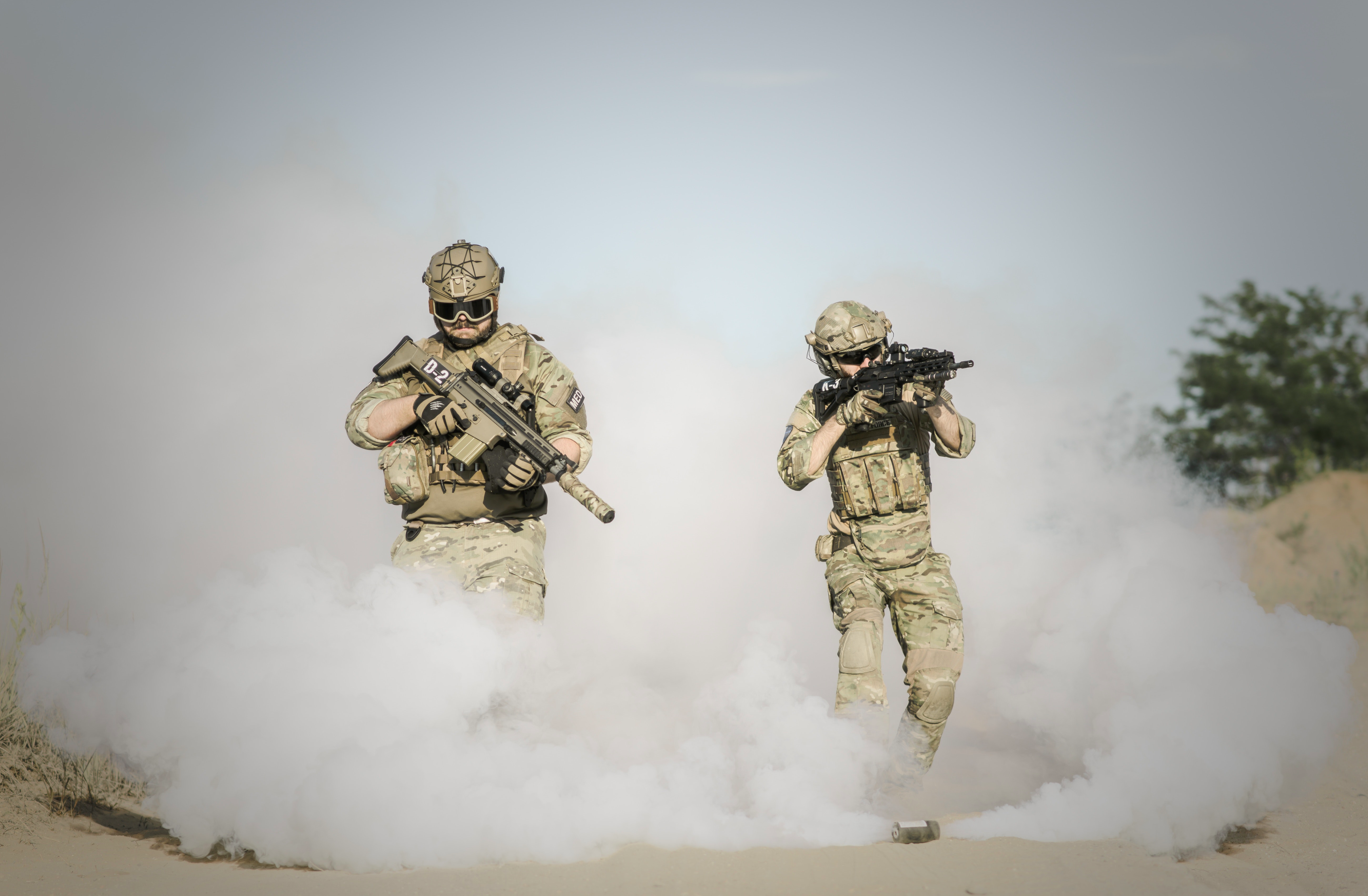
Whilst women have been gaining attention through Security Council Resolution on account of their womanly peacefulness, women also have a more significant role in military operations globally.
Israeli women participating Israel’s Defence Force (IDF) with women comprising 33% of all IDF soldiers and 51% of its officers in 2011. There are currently around 4,000 women who are serving in the Pakistan Armed Forces (PAF) . Currently, Kurdish female fighters are tacking on the so-called Islamic State in Syria, claiming that ‘ISIS are afraid of girls’ giving them a special advantage.
Despite the advancement in women’s participation in various forms, the reasoning behind the push for these advancements is still blurred, as Charlesworth discusses in Are Women Peaceful:
Although an argument for women’s participation could be based on equality, it is usually made on the basis of women’s utility to peace.” It seems then odd, when looking at other feminist arguments on equal pay, property rights and suffrage movements that they are argued for on a basis of equality rather than their ‘womanly’ qualities. With these new Security Council resolutions and the media portrayals, there is so much riding on the assumption that women are more peaceful than men.
Women fighting for the so-called “Islamic State”
There is a notion that there are something women could simply not do on the basis that they are women and these acts would affect other women. The so-called “Islamic State,” (ISIS) has committed atrocities against women. ISIS have sold masses of Yazidi women and young girls in sexual slavery. The Yazidi community has been specifically targeted by ISIS. In 2014, an estimated 5,000 Yazidis were taken and out of those, 3,500 are thought to be still missing 17 . In November 2015, mass graves of elderly Yazidi women were discovered after the liberation of Sinjar in North West Iraq, from the holds of ISIS. Around eighty women were found in the mass graves, believed to be between the ages of forty to eighty years old. These women were deemed ‘too old,’ to be sex slaves and therefore were murdered.’
Despite the crimes I have described, ISIS have attracted hundreds of women to fight and work on behalf of them. It is reported by counter-terrorism police, that 56 British girls and women are thought to have fled from the UK for Syria in 2015 to join ISIS. Famously, in June 2015, the husbands of three British sisters who were believed to have taken their children to join ISIS and fight in Syria (the youngest child being three years old) wept as they pleaded with their wives to come back to the UK. In 2014, Samra Kesinovic and Sabina Selimovic, two Austrian teenagers who were 17 and 15 years old respectively, fled Austria to join ISIS in Raqqa. In Raqqa, ISIS created the al-Khansaa’ Brigade, an all-female unit. Its purpose is to apprehend civilian women who do not follow the ISIS strict brand of Sharia law. This law stipulates that women should be fully covered in public and accompanied by a male chaperone.
There are a number of different contributions which women make to support ISIS. One is being violent themselves, which is what the al-Khansaa’ Brigade was established for, as one 20-year-old woman who is known as ‘Doaa’, explained that her ‘role within the elite police squad was to lash women who tried to escape or wore the wrong clothes.’ Often, violence against women in ISIS is often assumed to be only perpetrated by men, but this is not the case with the al-Khansa brigade.
The al-Khansa brigade have repeatedly posed for photos with guns, with severed heads and guiding sex slaves through the streets of Raqqa 23 . The all-female brigade have also been known to run the brothels where ISIS-fighters go to ‘relieve,’ themselves after their return from fighting 24 , to have beaten a seventeen year old to death after raising her niqab whilst browsing clothes and beating a woman to death after breastfeeding in public.
There are two types of contrasts between the ‘peaceful, gentle woman,’ and the women participating in ISIS. The first is that the women who are recruited by ISIS may have been recruited “into vital support roles through effective social-media campaigns that promise devout jihadist husbands, a home in a true Islamic state and the opportunity to devote their lives to their religion and their God.” It is likely that these women will have already heard of the beheading, the torture and the murders that ISIS have committed, so although they may be attracted to ISIS for the promise of husbands or devout religious lives, they must on some level accept the violence that the men use against other people or are in fact, attracted to the violence of ISIS itself and the glory it promises to its recruits.
The other contradiction is between the idea that being a woman, immediately makes you opposed to sexual violence. Through the support of the female ISIS members, male ISIS fighters have been able to sexually exploit civilian women. With the support of the female ISIS members, ISIS have been able to take women into captivity, ‘pass women around,’ use them for sexual slavery and run brothels. The ISIS female members show that even though UNSCR 1888 assumes women and children are those that are at risk from sexual violence perpetrated by men, women can be culpable for the sexual violence as well.
Even when the female ISIS members are not fighting, they can be facilitating violence. It is impossible to imagine that ISIS would enjoyed the same success without the support of their female members. The fact that they attempt to recruit women, through social media and propaganda videos, shows that ISIS know how well women can contribute to their organisation and how violent they can prove themselves to be.
Female Soldiers in the Abu Ghraib Prison Torture and Abuse Scandal
The Abu Ghraib Prison torture and abuse scandal shocked people, with photos of prisoners being mocked and humiliated spread across newspapers and television screens for the world to see. In 2004, the photos were leaked, containing ‘disturbing pictures of naked prisoners piled on top of each other, others hooded and wired with electrodes. Worldwide revulsion at the scandal has forced the US president into a public apology and threatened the position of the US defence secretary, Donald Rumsfeld.’ A number of soldiers were convicted for the abuse, the most notable being Sabrina Harman, Lyndie England, Thomas Pappas, Steven Jordan, Charles Graner and Megan Ambuhl. These soldiers were called many things, but George W. Bush claimed that the soldiers were merely “a few bad apples.”
Out of the photos, of which there were over 2,000, only some came into the public domain and a number became iconic in the ‘war on terror.’ In one photo, an unidentified Abu Ghraib detainee appears to have wires attached to his hands and around his neck and is standing on a box. In another photo, England pulls a lead attached to the neck of a naked prisoner, who is forced to crawl on the floor, while Ambuhl watches. England appears in another photo, in which she seems to be mocking the genitalia of one of several naked and hooded detainees. One photo shows England and Graner smiling for the camera and giving thumbs ups, whilst standing behind a pile of naked prisoners and in another Harman smiles and gives a thumbs up over a corpse of a detainee. Given that some of the photos were deemed too upsetting to be released into the public domain, it is safe to assume that there may have been worse photos. No sooner than those that were leaked to the press, came the questions ‘But how could women do this?’ Once again, the assumption is that women serving in Iraq would be inherently more peaceful, gentler and kinder to the Iraqi prisoners. Men, women and children endured sexual violence in the Abu Ghraib prison and in many of the known cases, the female soldiers were complicit in the acts. The scandal highlights the fact that not only can men be victims, but women can be the perpetrators of sexual violence.
Hilas also said he witnessed an Army translator having sex with a boy at the prison. He said the boy was between 15 and 18 years old. Someone hung sheets to block the view, but Hilas said he heard the boy’s screams and climbed a door to get a better look. Hilas said he watched the assault and told investigators that it was documented by a female soldier taking pictures.
“The two American girls that were there when they were beating me, they were hitting me with a ball made of sponge on my dick. And when I was tied up in my room, one of the girls, with blonde, she is white, she was playing with my dick.” […] Others remembered how soldiers ordered them to masturbate, sometimes in front of female soldiers, and to simulate homosexual acts.
As I tried hard to explain to her that I was wrongly rounded up, the female soldier started accosting and kicking me with my cries and pleas falling on dead ears. […] She gave me a cup of water and no sooner had I started sipping it than I went into a deep trance to find myself later naked and raped.
Even despite the notion that women tend to ‘look out for another,’ or that all women are in a solidarity movement against sexual violence, it is clear that the female soldiers facilitated and perpetrated sexual abuse, whether it was to impress their male counterparts, to take joy out the detainees humiliation or for their own sheer sexual enjoyment.
Even within the extra focus on the women in the torture, England and Harman had more coverage than anyone. England’s legal defence was that she was influenced, manipulated and intimidated by Graner, with whom she was in a relationship with. She said that ‘When we first got there, we were like, what’s going on? Then you see staff sergeants walking around not saying anything [about the abuse]. You think, OK, obviously it’s normal.” Whereas Harman claimed it was her own doing, stating that her decisions were ‘mine and mine alone.’ This begs the question, was England participating in the abuse due to her own aggressive nature or truly because she was manipulated by Graner and her environment? Many would argue that women often try to be seen as ‘one of the guys,’ so participate in behaviour that is not natural for them, however, I would argue that excuse could not be used in England’s case.
Both Harman and England seem to show aggressive and sadistic tendencies, before and after the scandal. The whistle-blower, Joe Darby, described his first impression of Harman in an interview, saying:
She was a piece of shit from the day I met her. Before we ever got to Abu Ghraib, when we were still in Hilla, she had this kitten for three days when a dog came and killed it. So Harman decided to dissect it. She said there were no marks on the outside, so she dissected it and found some ruptured organs or something. And then she decided to mummify it. She tried different methods, but all she ended up with was the head. A damned mummified cat;s head, for Christ’s sake. This rotted-out head with pebbles for eyes.
Most people would find this behaviour strange and question Harman’s mental wellbeing. Even despite England’s defence which said she was manipulated by Graner, she remains unrepentant and fails to see any wrongdoing on her part, saying “Sorry? For what I did? […] All I did was stand in the pictures. Saying sorry is admitting I was guilty and I’m not. I was just doing my duty.” Given their history and current attitudes towards the abuse, it is clear that they perpetrated the abuse out of the sheer enjoyment, rather than being manipulated to do so by the male soldiers. The photos are not only showing abuse, but with the grins and thumb ups for added humiliation.
There are a few things that I believe it is easy to take away from the women in the Abu Ghraib Prison torture and abuse scandal. Having the women present did not stop sexual violence in the prison, and reportedly, they facilitated it. The women were not only passive in the torture and abuse, they were also the perpetrators. None of the women became whistle-blowers from witnessing and partaking in the abuse, it was left to a male soldier.
These women were not inherently peaceful, and although one might argue the female soldiers used torture as a means to fit in and become ‘one of the guys,’ we must in fact accept that if women are equal to men they can also commit horrendous acts and be completely culpable, as men are. In the words of Barbara Ehrenreich, ‘A uterus is no substitute for a conscience,’ and it clearly was not in Abu Ghraib.
The All-Female Peacekeeping Unit in Liberia: The United Nations Mission in Liberia (UNMIL)
The people of Liberia suffered two civil wars from 1989 until 2003, where around 250,000 people were killed and many thousands more fled the fighting. 40 The United Nations Mission in Liberia (UNMIL) was established by UNSCR 1509 of 19 September 2003 to support the implementation of the ceasefire agreement and oversee the peace process. It also vowed to protect United Nations staff, facilities and civilians along with supporting national security reform, including national police training and formation of a new, restructured military.
By 2007, India was already the largest troop contributor to United Nations mission and had participated in 43 peacekeeping missions. 42 For the first time in the history of United Nations peacekeeping, an all-female Formed Police Unit (FPU) from India arrived in Liberia. The aim of the operation was to strengthen the rule of law and maintain peace. The paramilitary police unit of women, which made nine rotations until the departure in 2016, were carefully watched around the world, as the success of this one unit of female peacekeepers, could be proof that women make better peacekeepers.
On departure, the women were celebrated as naturally becoming ‘part of the family,’ in Liberia and ‘role models for the local girls.’ It was even noted that ‘most of them were mothers,’ when they returned to India. The success of the peacekeeping mission was attributed to the fact that the peacekeepers were women, as opposed to attributing the success to their individual skills. At the same time, a lot of the media would undermine the work of male peacekeepers when celebrating the women hear a woman say “I have been raped. My daughter has been raped,” Abraham said. All they could do was sympathize and provide the kind of comfort a male counterpart could not.” This attitude suggests that all women naturally understand the plight of women who have been the victim of sexual violence, whether they have experienced sexual violence or not.
The idea of women being there to be good role models for other women in the community arises repeatedly when looking at UNMIL, Clare Hutchinson, a gender affairs officer at the Department of Peacekeeping Operations in New York, said “it was hoped that the Indian women would win the trust of Liberian women and perhaps serve as role models.” Whilst Colonel Madhubala Bala claims that when the local women see the female peacekeepers, they get inspired by them.’ It seems there is more focus on the FPU serving in UNMIL as role models, rather than their work as peacekeepers.
The language used when discussing the female peacekeepers in Liberia creates a binary. Not only does it cast women as successful peacekeepers because they are women, it undermines their work. Any success an all-male unit have had will be attributed to the organisation, the skills and hard work of the unit. At the same time, in an all-female unit, their skills are being ‘womanly,’ and because they are women, it is assumed that they understand gender-based violence and sexual violence better than their male counterparts. This also undermines the work of male peacekeepers, who are perceived as unable to understand sexual violence or be sympathetic as a woman can, nor can they be celebrated for ‘role models.’
Conclusion
Women and men are affected by war. Women can be passive victims of war, just as they can be violent aggressors. Men, women and children endure violence, injury loss, displacement and mental health problems that are a result of war. Generally speaking, all genders have more to gain from peacetime than they do from times of unrest. To believe that women are inherently peaceful because women have more to gain from peacetime, is to assume that men have more to gain from war. By this logic, men are always active in war and women are passive. Women, however, have always played a role in war. If they are not in actual combat, then in the vital areas of intelligence gathering, smuggling, medical care, food preparation and support. Although women may not always be perpetrating the violence, they can be facilitating it.
Although a number of gendered perspectives are important in post-conflict talks, adding women does not guarantee success, nor relying on one narrative in policy making. Female participation is important on the grounds of equality and because war affects both men and women. This importance should not stem from the notion that women are gentler, more nurturing creatures who only want to protect their children.
Whilst I do not want to underplay the contributions to peace processes women have given, to add women to a process for the sake that they are women and therefore inherently peaceful, might be merely setting this process up to fail. Adding to this, women are not guaranteed to stop scandals within the military or peacekeeping operations and in some situations, they can be the perpetrators and facilitators of violence and sexual violence.
The cases of UNMIL, Abu Ghraib and ISIS have demonstrated an assumption of where women have been successful, their success have been attributed to being women. At the same time, where women have been violent, it is attributed to male pressure. This association can be dangerous, as associating women with moral superiority emphasizes the gender stereotypes we should be trying to rid the world of. This means that less thought is given as to how we can actively increase women’s participation on the grounds of equality. As a result, this hinders the process of substantive change.
Furthermore, seeing women as inherently peaceful casts a binary, making women the victims and men the perpetrators. This binary is largely the basis for the Security Council Resolutions discussed in my essay.
In Abu Ghraib, the men did not fit within this binary, but unfortunately there is no Security Resolution that focuses on men as the victims of sexual violence. This is perhaps because that the sexual abuse they endure is referred to as ‘torture.’ The pictures of the women sexually abusing the men are readily available. However, despite the endless accounts of sexual violence against the Iraqi women, the photos have not been in the public domain, nor have they been so widely discussed. This could be a problem that arises out of the ‘peaceful woman,’ complex, allowing sexual violence against women to become something harder to talk about and much worse than sexual violence against men, which becomes ‘torture.’
As a society, we should be pushing for equal participation on the grounds of equality, not on an assumption that women obtain a moral superiority to men. Analysing this notion, I would argue it undermines women’s work and hinders full involvement in peace movements, because any contribution they give on the grounds of individual skills, experience and qualities are attributed to that they are women.
Bibliography:
Security Council Resolutions
UN Security Council, Security Council resolution 1325 (2000) [on women and peace and security] , 31 October 2000, S/RES/1325 (2000), available at: http://www.refworld.org/docid/3b00f4672e.html [accessed 6 April 2016]
UN Security Council, Security Council Resolution 1509 (2003) on establishment of the UN Mission in Liberia (UNMIL), 19 September 2003, S/RES/1509 (2003), available at:http://www.refworld.org/docid/3f8d304d4.html [accessed 7 April 2016]
UN Security Council, Security Council resolution 1820 (2008) [on acts of sexual violence against civilians in armed conflicts], 19 June 2008, S/RES/1820 (2008), available at: http://www.refworld.org/docid/485bbca72.html [accessed 6 April 2016]
UN Security Council, Security Council resolution 1888 (2009) [on acts of sexual violence against civilians in armed conflicts], 30 September 2009, S/RES/1888 (2009), available at:http://www.refworld.org/docid/4ac9aa152.html [accessed 6 April 2016
UN Security Council, Security Council resolution 1889 (2009) [on women and peace and security], 5 October 2009, S/RES/1889 (2009), available at: http://www.refworld.org/docid/4acdd8512.html [accessed 6 April 2016]
UN Security Council, Security Council resolution 1960 (2010) [on women and peace and security], 16 December 2010, S/RES/1960(2010), available at: http://www.refworld.org/docid/4d2708a02.html [accessed 6 April 2016]
UN Security Council, Security Council resolution 2106 (2013) [on sexual violence in armed conflict] , 24 June 2013, S/RES/2106 (2013), available at: http://www.refworld.org/docid/51d6b5e64.html [accessed 6 April 2016]
UN Security Council, Security Council resolution 2122 (2013) [on women and peace and security] , 18 October 2013, S/RES/2122 (2013), available at: http://www.refworld.org/docid/528365a44.html [accessed 6 April 2016]
UN Security Council, Security Council resolution 2272 (2016) [on sexual exploitation and abuse by United Nations peacekeepers] , 11 March 2016, S/RES/2272 (2016), available at: http://www.refworld.org/docid/56e915484.html [accessed 7 April 2016]
Websites
al-Bahri A, ‘Syria News | Syria Deeply, Covering The Crisis’ (Syriadeeply.org, 2016)<http://www.syriadeeply.org/articles/2014/07/5799/raqqa-all-female-isis-brigade-cracks-local-women/> accessed 6 April 2016
Allison S, ‘Are Women Better Peacekeepers? These UN Officers Think So’ (the Guardian, 2015) <http://www.theguardian.com/world/2015/sep/17/women-better-peacekeepers-un-officers-think-so> accessed 6 April 2016
Baker A, ‘How ISIS Is Recruiting Women From Around The World’ (TIME.com, 2014) <http://time.com/3276567/how-isis-is-recruiting-women-from-around-the-world/> accessed 6 April 2016
Basu M, ‘Indian Women Peacekeepers Hailed In Liberia – CNN.Com’ (Edition.cnn.com, 2016) <http://edition.cnn.com/2010/WORLD/africa/03/02/liberia.women/> accessed 7 April 2016
Brockes E, ‘Interview: She’s Home From Jail, But Lynndie England Can’t Escape Abu Ghraib’ (the Guardian, 2009) <http://www.theguardian.com/world/2009/jan/03/abu-ghraib-lynndie-england-interview> accessed 6 April 2016
Butnia J, ‘Isis’s Al-Khansaa Brigade Kills Woman For Breast-Feeding Baby In Public In Raqqa’ (International Business Times UK, 2015) <http://www.ibtimes.co.uk/isiss-al-khansaa-brigade-kills-woman-breast-feeding-baby-public-raqqa- 1535110> accessed 6 April 2016
Charlesworth H, ‘Are Women Peaceful? Reflections On The Role Of Women In Peace-Building’ (2008) 16 Feminist Legal Studies <http://link.springer.com/article/10.1007/s10691-008-9101-6/fulltext.html> accessed 6 April 2016
Dearden L, ‘Isis Are Afraid Of Girls,’ Say Kurdish Female Fighters Driving The Terrorist Group Back’ (The Independent, 2015) <http://www.independent.co.uk/news/world/middle-east/isis-are-afraid-of-girls-kurdish-female-fighters- believe-they-have-an-unexpected-advantage-fighting-a6766776.html> accessed 6 April 2016
Ehrenreich B, ‘A Uterus Is No Substitute For A Conscience’ (Countercurrents.org, 2004)<http://www.countercurrents.org/iraq-barbara220504.htm> accessed 6 April 2016
Elbagir N, ‘Mass Graves, Missing Children: Brutality In Sinjar’ (CNN, 2016)<http://edition.cnn.com/2016/01/12/middleeast/nima-elbagir-sinjar-mass-graves/> accessed 6 April 2016
Eleftheriou-Smith L, ‘Escaped Isis Wives Describe Life In The Punishing All-Female Al-Khansa Brigade’ (The Independent, 2015)<http://www.independent.co.uk/news/world/middle-east/escaped-isis-wives-describe-life-in-the-all-female-al-khansa-brigade-who-punish-women-with-40-lashes-10190317.html> accessed 6 April 2016
‘Evidence Of Alleged Sexual Abuse Against Underage Boys By US Soldiers At Abu Ghraib Remains Classified’ (MintPress News, 2015) <http://www.mintpressnews.com/evidence-of-alleged-sexual-abuse-against-underage-boys-by-us-soldiers-at-abu-ghraib-remains-classified/207812/> accessed 6 April 2016
Gabreyes R, ‘The Case For Releasing Torture Photos From Abu Ghraib’ (The Huffington Post, 2015)<http://www.huffingtonpost.com/2015/01/06/torture-photos-threaten-national-security_n_6424710.html>accessed 6 April 2016
Hall J, 'Female ISIS Jihadis Marry At NINE And Are Not Allowed To Leave Homes' (Mail Online, 2015)<http://www.dailymail.co.uk/news/article-2940732/The-REAL-life-female-ISIS-jihadist-married-NINE-banned-leaving-home-told-beauty-parlours-work-devil-Western-girls-lie-exciting-lifestyle-entice-women-report-finds.html>accessed 6 April 2016
Hylton W and Riedel J, 'Prisoner Of Conscience' (GQ, 2006) <http://www.gq.com/story/joe-darby-abu-ghraib>accessed 6 April 2016
'Indian Female Peacekeepers Leave Liberia After Successful Mission – Peace Times' (Peace Times, 2016)<http://www.peacetimes.news/2016/02/14/indian-female-peacekeepers-leave-liberia-after-successful-mission/>accessed 7 April 2016
'Iraqi Woman Recalls Abu Gharib Rape Ordeal' (Rense.com, 2016) <http://www.rense.com/general54/aaby.htm>accessed 6 April 2016
Jones D, 'Why The Hell Should I Feel Sorry, Says Girl Soldier Who Abused Iraqi Prisoners At Abu Ghraib Prison' (MailOnline, 2016) <http://www.dailymail.co.uk/news/article-1192701/Why-hell-I-feel-sorry-says-girl-soldier-abused-Iraqi-prisoners-Abu-Ghraib-prison.html#ixzz44wqbX1rY> accessed 6 April 2016
Just A Few Bad Apples?' (The Economist, 2005) <http://www.economist.com/node/3577249> accessed 7 April 2016
Leonard I, 'ISIS 'Female Gestapo' Bite And Whip Any Woman Who Steps Out Of Line' (mirror, 2015)<http://www.mirror.co.uk/news/world-news/isis-female-gestapo-leading-campaign-6046944> accessed 6 April 2016
'Liberia Country Profile – BBC News' (BBC News, 2016) <http://www.bbc.co.uk/news/world-africa-13729504>accessed 7 April 2016
'May 2004: The Images That Shamed America | Gallery | Guardian.Co.Uk' (Theguardian.com, 2016)<http://www.theguardian.com/gall/0,8542,1211872,00.html> accessed 6 April 2016
'Missing Bradford Sisters: Fathers Appeal Over 'Syria' Family – BBC News' (BBC News, 2016)<http://www.bbc.co.uk/news/uk-33156712> accessed 6 April 2016
‘Pakistan Fighter Pilot Wins Battle Of Sexes, Now She’s Ready For War – The Express Tribune’ (The Express Tribune, 2013) <http://tribune.com.pk/story/562613/pakistan-fighter-pilot-wins-battle-of-sexes-now-shes-ready-for-war/>accessed 6 April 2016
Payton M, 'Teen Escaped Isis Sex Slavery But Had To Leave Her Baby Son Behind' (The Independent, 2016)<http://www.independent.co.uk/news/world/middle-east/yazidi-teenager-isis-sex-slave-escaped-forced-leave-baby-son-behind-nihad-barakat-shamo-alawsi-a6922426.html> accessed 6 April 2016
Piggott M, ‘Isis: Austrian Teen ‘Poster Girl’ Reportedly Beaten To Death For Trying To Leave Raqqa’ (International Business Times UK, 2015) <http://www.ibtimes.co.uk/isis-teen-austrian-poster-girl-reportedly-beaten-death-trying-leave-raqqa-1530343> accessed 6 April 2016
‘UN News – FEATURE: Hailed As ‘Role Models,’ All-Female Indian Police Unit Departs UN Mission In Liberia’ (UN NewsService Section, 2016) <http://www.un.org/apps/news/story.asp?NewsID=53218#.VwaRCfkrKM9> accessed 7 April 2016
'UN News – First UN Female Force Commander Takes Reins In Cyprus' (UN News Service Section, 2016)<http://www.un.org/apps/news/story.asp?NewsID=48462#.VwkBPvkrKM8> accessed 9 April 2016
Webb S, 'A Teen In Iraq Was Beaten To Death. Her 'Crime'? Window Shopping…' (mirror, 2015)<http://www.mirror.co.uk/news/world-news/isis-female-gestapo-beat-teenager-6062438> accessed 6 April 2016
Website I, 'More Female Soldiers In More Positions In The IDF' (IDF, 2011) <http://www.idf.il/1086-14000-EN/Dover.aspx> accessed 6 April 2016
‘Welcome To Permanent Mission Of India To The UN , New York’ (Pminewyork.org, 2016) <https://www.pminewyork.org/pages.php?id=1985> accessed 7 April 2016
'Women In Peacekeeping. United Nations Peacekeeping' (Un.org, 2016)<http://www.un.org/en/peacekeeping/issues/women/womeninpk.shtml> accessed 6 April 2016
'Women In UN Peacekeeping | Wikigender' (Wikigender.org, 2016) <http://www.wikigender.org/wiki/women-in-un-peacekeeping/> accessed 6 April 2016
Young H, 'Kidnapped By Isis At 15: 'I Never Thought I'd See The Day When I Was Free' (the Guardian, 2016)<http://www.theguardian.com/global-development-professionals-network/2016/mar/17/kidnapped-by-isis-at-15-i-never-thought-id-see-the-day-when-i-was-free> accessed 6 April 2016
Books
Kador J and García Córdoba D, Disculpa Eficaz (Grupo Editorial Patria 2010)
Journals
Charlesworth H, 'Are Women Peaceful? Reflections On The Role Of Women In Peace-Building' (2008) 16 Feminist
Legal Studies <http://link.springer.com/article/10.1007/s10691-008-9101-6/fulltext.html> accessed 6 April 2016
Apel D, 'Torture Culture: Lynching Photographs And The Images Of Abu Ghraib' (2005) 64 Art Journal

 onsundays.tech.blog